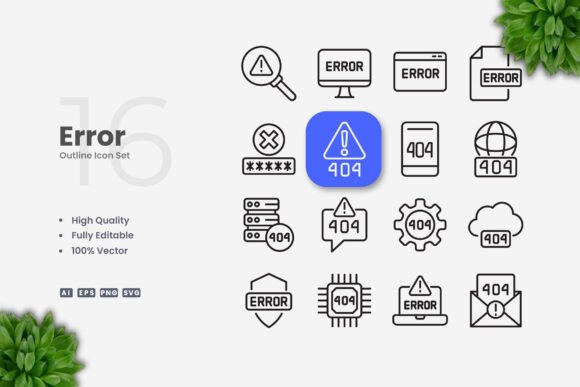
Error Icons: Simple, Clean, and Powerful
When it comes to visual communication, clarity is key. Error icons play a vital role in guiding users through digital and physical experiences, offering quick recognition of issues or warnings. These small but impactful symbols are essential for designers, developers, and creators looking to enhance user interaction across various platforms. With their clean lines and straightforward design, error icons are not only functional but also aesthetically pleasing, making them a valuable addition to any creative toolkit.
What makes error icons particularly interesting is their ability to convey complex messages in a simple format. Whether it's a warning sign, a notification, or an alert, these icons can be customized to fit different styles and needs. Their versatility allows them to be used in websites, mobile apps, books, social media, infographics, flyers, print materials, banners, posters, and more. The right icon can make the difference between a confusing experience and a seamless one.
Why Choose Simple and Clean Icon Design?
Simple and clean icon design is more than just a trend—it's a strategic choice that enhances usability and visual harmony. In a world filled with visual noise, minimalist icons stand out by focusing on clarity and purpose. This approach ensures that the message is communicated effectively without unnecessary distractions.
For designers, this means creating icons that are easy to recognize at a glance. A well-designed error icon should be instantly identifiable, even when scaled down or viewed from a distance. This is especially important in user interfaces where space is limited and visual hierarchy matters. By keeping the design minimal, you allow the icon to blend seamlessly into the overall layout while still delivering its intended message.
From a technical standpoint, simple designs are also easier to edit and adapt. Whether you're changing colors, adjusting stroke weights, or resizing for different formats, a clean design offers greater flexibility. This makes it easier to maintain consistency across multiple projects and platforms.
Creative Possibilities with Error Icons
The potential applications of error icons are vast, and their use can vary depending on the project’s goals and audience. For instance, a mobile app developer might use error icons to signal form validation issues, while a marketer could incorporate them into social media graphics to highlight important alerts or notifications.
Designers can experiment with different styles to match the tone of their work. A modern, flat design might be ideal for a tech startup, while a more traditional, outlined style could suit a print publication or educational material. The key is to align the icon’s aesthetic with the overall brand identity and user experience.
Another creative angle is to use error icons as part of a larger visual system. For example, in an infographic, they can help break up text and draw attention to key points. In a poster, they can serve as visual cues that guide the viewer’s eye and reinforce the message being conveyed.
Adapting Error Icons for Different Goals and Audiences
Understanding your audience is crucial when using error icons. A younger demographic may respond better to bold, colorful designs, while a professional setting might call for more subdued, elegant options. By tailoring the design to the target audience, you can ensure that the icons resonate effectively and feel relevant.
For small business owners, error icons can be a cost-effective way to improve user experience without compromising on quality. They can be used in marketing materials, product packaging, or customer support resources to provide clear guidance and reduce confusion. Similarly, educators can integrate error icons into presentations or learning tools to help students understand complex concepts more easily.
Freelancers and content creators can benefit from the customizable nature of error icons. Whether designing for a client or personal project, having access to editable vector files allows for quick adjustments and unique variations. This flexibility is especially useful when working on multiple platforms or adapting designs for different formats.
Practical Tips for Using Error Icons
To get the most out of error icons, start by selecting the right type for your needs. Consider the context in which the icon will be used and choose a design that aligns with the overall theme. For example, a red exclamation mark may be appropriate for a critical error, while a yellow triangle could indicate a less severe warning.
Consistency is another important factor. If you’re using multiple icons in a project, ensure that they follow a similar style and scale. This helps create a cohesive look and prevents visual clutter. Additionally, always test your icons in different sizes and environments to ensure they remain legible and effective.
Finally, don’t forget about accessibility. Make sure that your icons are distinguishable from other elements on the screen and that they meet color contrast guidelines. This ensures that all users, including those with visual impairments, can easily interpret the message being conveyed.
Getting Started with Error Icons
If you’re ready to explore the world of error icons, there are plenty of resources available to help you get started. Many designers offer downloadable packages that include a variety of vector files, such as AI, EPS, SVG, and PNG formats. These files are typically editable in software like Adobe Illustrator and CorelDRAW, allowing for easy customization and integration into your projects.
For those new to icon design, starting with a set of pre-made error icons can be a great way to learn and experiment. As you become more familiar with the process, you can begin creating your own designs or modifying existing ones to suit your specific needs. Whether you're a seasoned designer or just starting out, error icons offer a powerful tool for improving communication and user experience.