Fine Arts Icons: Simple, Clean, and Versatile
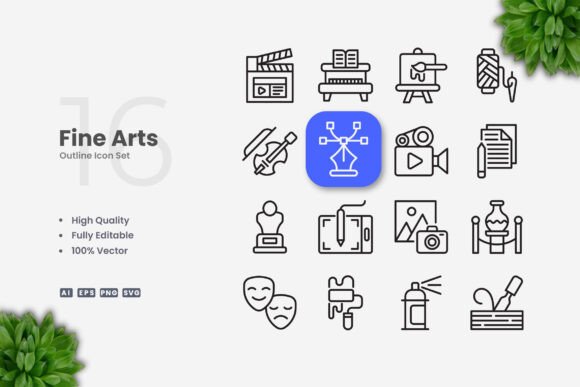
Fine Arts Icons offer a unique blend of artistic expression and practical design. These icons are crafted with simplicity in mind, making them ideal for a wide range of applications. Whether you're working on a website, mobile app, or print project, Fine Arts Icons provide a polished look that can elevate your work without overwhelming it.
Designed for both beginners and professionals, these icons are easy to use and highly customizable. Their clean lines and minimalistic approach make them suitable for various industries, from education to marketing. With the ability to resize, recolor, and adjust stroke weight, they adapt to different needs seamlessly.
Why Different Audiences Care About Fine Arts Icons
Fine Arts Icons appeal to a broad audience, but each group may value them for different reasons. For instance, a beginner might appreciate the ease of use and straightforward design, while a professional designer could focus on the quality and flexibility of the files.
Entrepreneurs and small business owners often look for cost-effective solutions that still maintain a high standard of quality. Fine Arts Icons fit this need by offering a versatile set that can be used across multiple platforms. Educators might find them useful for creating visual aids, while marketers could use them to enhance presentations or social media content.
Hobbyists and creators may value the creative freedom that comes with editable vector files. The ability to modify colors and strokes allows for personalization, which is essential when developing a unique style or brand identity.
Key Features of Fine Arts Icons
The features of Fine Arts Icons make them a valuable resource for anyone involved in design. Here are some of the most notable aspects:
- High Quality Design: Each icon is meticulously crafted to ensure clarity and consistency across different sizes and formats.
- 100% Vector Files: These icons are created using vector software like Adobe Illustrator and CorelDRAW, allowing for unlimited scalability without loss of quality.
- 100% Customizable: Users can easily change colors, adjust stroke weights, and modify other elements to match their specific needs.
- Editable Stroke: This feature gives designers more control over the appearance of each icon, making it easier to integrate into different projects.
- Easy Drag and Drop: The file format supports quick integration into design workflows, saving time and effort.
- Files Included: The package includes source files in AI, EPS, SVG, and PNG formats, ensuring compatibility with a variety of design tools.
- Readme.txt: A helpful guide is included to assist users in navigating the files and understanding the available options.
How Different Users Might Use Fine Arts Icons
For a beginner, Fine Arts Icons can serve as an excellent starting point for learning design principles. The clean and simple nature of the icons makes it easier to understand how visual elements communicate ideas effectively. They can also be used as templates to experiment with color schemes and layout designs.
Experienced designers might appreciate the efficiency and flexibility that these icons offer. Instead of creating icons from scratch, they can use Fine Arts Icons as a foundation and build upon them to suit specific projects. This saves time and ensures a consistent visual language across different mediums.
Business owners looking to create a strong brand presence can benefit from the versatility of these icons. They can be used in marketing materials, websites, and social media profiles to maintain a cohesive look. The ability to customize the icons also allows for a more personalized brand experience.
For educators, Fine Arts Icons can be a valuable tool in teaching design concepts. They can be used to illustrate topics such as composition, color theory, and visual hierarchy. Additionally, students can practice modifying and adapting the icons to develop their own design skills.
Practical Examples for Different User Types
A blogger might use Fine Arts Icons to enhance their website's navigation or highlight key sections of their content. The icons add a professional touch without distracting from the text. They can also be used in social media posts to make content more engaging and visually appealing.
A freelancer working on a client project could leverage Fine Arts Icons to quickly create mockups or prototypes. The editable nature of the files allows for adjustments based on client feedback, ensuring that the final product meets expectations. This can save time and reduce the need for extensive revisions.
A publisher preparing a book or magazine might use these icons to illustrate chapters, sections, or infographics. The clean design ensures that the icons complement the overall layout without overpowering the content. They can also be used in digital versions of publications for added interactivity.
Considerations for Choosing Fine Arts Icons
When deciding whether Fine Arts Icons are right for your project, consider your specific needs and goals. If you prioritize ease of use and flexibility, these icons are an excellent choice. They are designed to be user-friendly, even for those with limited design experience.
If quality and reliability are important factors, the high-resolution vector files ensure that the icons maintain their clarity at any size. This is particularly beneficial for print projects where detail and precision matter.
For those focused on commercial use, the availability of multiple file formats provides the necessary tools to meet different requirements. The inclusion of a readme file also adds value by guiding users through the setup process.
Ultimately, Fine Arts Icons offer a practical solution for a wide range of design needs. Whether you're a beginner exploring the world of design or a professional seeking efficient tools, these icons can help bring your vision to life with ease and elegance.